
Memorial Lectures
2024/2025 Prof. Adam Potkay

Karol Wojtyła Memorial Lectures
Freedom and Determinism in Literature and Philosophy
Prof. Adam Potkay
William & Mary University, Virginia, USA
The John Paul II Institute
The Faculty of Philosophy
The John Paul II Catholic University of Lublin
March 24-28, 2025 30 Hour-Course 2 ECTS Points
9.30 am – 12:00 pm & 3 – 5.30 pm
Room C-220
Lectures in a hybrid form
https://bit.ly/2025_karol_wojtyla
Outline of introductory lecture, “Karol Wojtyła and Max Scheler on Freedom and Determinism,” and Overview of Lectures
As a philosopher and theologian, Karol Wojtyła insisted on the freedom of the person, specifically the freedom of the person through his experienced freedom of intellect and will, and the willful control of non-rational appetites and passions. Wojtyła built much of his philosophy in engagement with Max Scheler (1874-1928), who was for most of his career a Catholic phenomenologist and professor of philosophy at Cologne. Scheler is a foundational figure in what is known as “Lublin Thomism,” the attempt to marry Thomist theology with phenomenological philosophy. There is for Scheler, as for Aquinas and Wojtyła, an objective hierarchy of values according to which our actions are to be judged: an order rising from pleasure/displeasure through values that are life- or health-enhancing, then ‘spiritual’ values (including aesthetic and moral values), and finally, the highest modality of the holy and unholy. A good person’s order of values will be identical to this objective order.
Karol Wojtyła agreed with Scheler up to this point—but objected to his ethical emotionalism. For Scheler, who built—I will argue—on nineteenth-century English and German Romantics—values are feelable phenomena. These feelings lie below the level of willing or acting, though they may result in actions. Scheler calls our basic ethical response “emotional intuitions,” which come in the forms of love or hate towards a person or deed. If we love correctly, we are good persons; our intuitions correspond to the objective hierarchy of values now seen as an ordo amoris or ‘order of love.’
Wojtyła, in the lectures he delivered in Lublin between 1954-57, endorses much of Scheler’s philosophy, but not his ethical emotionalism. Scheler was right, he maintains, in holding we may intuitively find not only objective values but indeed the Thomistic hierarchy of values from bodily pleasure to deep holiness. But he was not right that intuitionism is a sufficient basis for ethics. For how can the passive reception of value account for the person’s willing the good, his self-conscious ethical action? And is this reception of value even possible without a prior, active judgment about what a value is?
Wojtyła might have noted that these problems extend, in some sense, back to the English and German Romantic poets, some of whom I will address later in these lectures—focusing on William Wordsworth and Samuel Taylor Coleridge. But Wojtyła, as a poet himself, knew that artistic phenomenology and the reverential mysteries poetry can disclose a different sphere than argumentative philosophy. As a philosophical phenomenologist, however, it is incumbent on Scheler to explain how one can get from knowing values (cognition) to actively willing those values (volition), and for Wojtyła Scheler’s philosophy is unable to do so; it is the will, and the agent’s self-actualization in willing as well as judging the good, that Wojtyła himself emphasizes in his early lectures through to his major treatise, The Acting Person(Polish edition, 1969).
Wojtyła’s opponent in all of this is causal and moral determinism. Determinism sees the individual as a subject, subjected to chains of prior causes and external influences that downplay or eliminate the will and its supposed freedom. Determinism, as I will show in these lectures, goes back to Homer’s Iliad and then ancient, pre-Christian philosophy and world views, most notably Stoicism. Materialist determinism was recurrent in modern empiricist philosophy after Thomas Hobbes, and will flourish in the mechanistic philosophies and literary movements of the nineteenth century: especially, we shall see, Bentham’s utilitarianism; Zola’s literary naturalism; and Marx’s view of history. Determinism is still a force to be reckoned with today in politics as well as philosophy—in behaviorism, evolutionary biology and phylogenetic determinism, “victimization” claims, the exteriorization of blame, and abdication of personal responsibility.
But while Wojtyła rejects causal determinism of a post-Hobbesian variety, he accepts another kind of determinism, an inheritance from Aristotelianism, ancient Stoicism and Thomism: teleological determinism. That is, although there are free persons, they are determined by a pre-given human/cosmic aim or telos; they must become what they are by nature or design meant to be. Teleology that rises from biology (a fetus is by nature designed to become an adult) to ethics (an adult, having both reason and sociability, is meant to be sociable/oriented towards common good), to politics (what is the best government for establishing the common good), to the cosmos (providence, all happening for the greatest overall good—a tenet from Stoicism to Christianity).
I offer this lecture series on the history of determinism and of freedom, from the ancients to Karol Wojtyła, to make historical sense of his intervention in this most important of human discourses. My seven remaining topics/nine lectures are:
- 2, Ancient Determinism (Iliad to the Stoics);
- 3, Christian Theology and free will (Augustine through Milton’s Paradise Lost);
- 4-5, Modern Determinism, two lectures, on Hobbes through literary naturalism (Zola, Richard Wright);
- 6-7, Romanticism and ethical intuitionism, two lectures, focusing on short poems by Coleridge and Wordsworth (and touching upon Coleridge’s Trinitarian turn), with reference to Scheler on feelings;
- 8, Freedom and Necessity as the novelistic topic of Tolstoy’s War and Peace;
- 9, Freedom and the contrarieties of the human person in Dostoevsky’s Brothers Karamazov (with a coda on Karol Wojtyła’s play The Jeweler’s Shop);
- 10, A coda on the freedom evidenced by certain types of literary wit and humor—I will refer here to parts of Shakespeare and also Gombrowicz’s novel Ferdydurke. I am inspired in this last section by a recent essay by Pope Francis, “There is Faith in Humor”: humor lifts others and is a medicine for ourselves. Francis tells this story about Wojtyła’s humor: in a preliminary session of a conclave, the young Cardinal was chided by a senior colleague for his athleticism—wasn’t this infra dig? Should a priest really ski and hike, swim and bike? Wojtyła replied: “But do you know that in Poland these are activities practiced by at least 50 per cent of cardinals?” In Poland at the time there were only two cardinals.
Phenomenologically, perhaps it is in humor and wit that freedom may most clearly be seen. Verbal and creative wit do not seem to be caused, but rather testify to a person actively associating and acting.
2023/2024 Prof. Stefan Sorgner

The John Paul II Catholic University of Lublin
John Cabot University in Rome
- By Stefan Lorenz Sorgner:
- On Transhumanism. Penn State University Press, 2020. (translated by Spencer Hawkins)
- We Have Always Been Cyborgs: Digital Data, Gene Technologies, and an Ethics of Transhumanism. Bristol University Press, 2022.
- Philosophy of Posthuman Art. Schwabe, 2022.
- On Euro-Transhumanism:
- Edited by Aura Elena Schussler and Maurizio Balistreri: Metahumanism, Euro-transhumanism and Sorgner’s Philosophy: Technology, Ethics, Art. Trivent, 2023.
2023/2024 Prof. Jarosław Merecki SDS

Zapraszamy Państwa do udziału w tegorocznej edycji wykładów Karol Wojtyła Memorial Lectures organizowanych przez Instytut Jana Pawła II i Wydział Filozofii na Katolickim Uniwersytecie Lubelskim Jana Pawła II.
Tegoroczny cykl zatytułowany Sources and the Basic Concepts of the Anthropology of Karol Wojtyła zostanie wygłoszony przez Prof. Jarosława Mereckiego SDS (The John Paul II Pontifical Theological Institute for Marriage and Family Sciences). Kurs składa się z wykładów, które będą odbywały się w dniach 7-14 maja 2024 r. Wykłady odbędą się w wariancie hybrydowym; stacjonarnie – w sali C220 (Collegium Joannis Pauli II) – i będą transmitowane online.
Lectures in a hybrid form https://bit.ly/2024_karol_wojtyla_
2022/2023 Prof. Arthur McVey

Jacek Woroniecki Memorial Lectures
Arthur William McVey PhD
The role of classical rhetoric in the struggle against contemporary media-political sophistry
Antiquarian Rhetoric, 21st Century
Post-Truth Media Psychoanalytical Sophistry and Aristotelian-Thomistic Sociocultural Psychology
ONLINE
https://bit.ly/2023_Woroniecki
May 22-26, 2023 [ONLY ONLINE]
3.00 p.m. – 4.30 p.m. (2 hours)
4.45 p.m. – 6.15 p.m. (2 hours)
6.45 p.m. – 8.15 p.m. (2 hours)
Arthur William McVey PhD
Adjunct Professor, School of Marketing, Webster University (St. Louis, USA);
Consumer Psychologist Research, Euclid Consultants;
Episcopal Church, Rector
His approach is constructed by means of, what he call, a „trading zone methodology”, between an Aristotelian-Thomisitc philosophical psychology, sociocultural psychology and a rhetorical understanding of the unconscious personal and cultural dialogue.
The Role of Classical Rhetoric in the Struggle against Contemporary Media-Political Sophistry
Antiquarian Rhetoric, 21st Century Post-Truth Media Psychoanalytical Sophistry and Aristotelian-Thomistic Sociocultural Psychology
Arthur William McVey, Ph.D.
Professor’s approach is constructed by means of, what he call, a “trading zone methodology”, between an Aristotelian-Thomisitc philosophical psychology, sociocultural psychology and a rhetorical understanding of the unconscious personal and cultural dialogue. He will explain traditional rhetoric and the emergence of the New Rhetoric. He approach the new rhetoric from the perspective of a Rhetorical Social Psychology:
“The 21st Century is longer Peter Drucker’s knowledge culture. We have returned to the Rhetorical Culture of Logos, Pathos, Ethos. However, in media rhetoric it becomes Logos, Pathos, Ethos and Catharsis. The art of persuasion is replacing knowledge and facts in a market driven socio-cultural imaginary.
Rhetoric is an extremely promising domain of investigation for the 21st century. Over the past few years, I have been observing the academic discipline of rhetoric move to greater attention in social psychology. The main figure in this movement has been Michael Billig from Loughborough University. He avers that the new social psychology is Rhetorical Social Psychology. This new social psychology is grounded, on what he calls, an Antiquarian Psychology. The new social psychology is most compatible with a traditional Aristotelian-Thomistic understanding of social behavior, language and culture. I would like to use visuals in my presentation, especially to present concisely basic concepts from the new rhetoric by Chaim Perelman, Ed Burke and Robert Samuels. I am moving to the concept that in the digital-media age we have a social psychology attitude scale ranging from a rhetorical quasi-logical argument to contagious-viral sophistry”.
2022/2023 Prof. Jove Jim S. Aguas

Karol Wojtyła Memorial Lectures
The Nature of Marriage and Family in the Teachings of Karol Wojtyla – Pope St. John Paul II
Prof. Jove Jim S. Aguas
University of Santo Tomas – Manila, Philippines
The John Paul II Institute
The Faculty of Philosophy
The John Paul II Catholic University of Lublin
May 15-22, 2023 30 Hour-Course 2 ECTS Points
9.10 am – 11:40 pm & 3 – 4.40 pm
Room C-220
ONLINE https://bit.ly/2023_karol_wojtyla
The Seminar on the Thoughts of Karol Wojtyła – John Paul II on the Anniversary of the Birth of Pope John Paul II
May 18, 2023 5.00 PM
Abstract
Marriage and the family are two of the most significant human institutions; without them, there would not be a human society or community. The Church recognizes “the great value of marriage and the family and their deepest meaning” (Familiaris Consortio -FC). However, in today’s world, the meaning of marriage and the family is constantly being redefined, or at least there is an attempt to give it a different definition. Consequently, understanding the institution of marriage and the family and how they are practiced is also undergoing certain modifications. Pope St. John Paul II, in the Familaris Consortio, noted that “the family in the modern world, as much as and perhaps more than any other institution, has been beset by the many profound and rapid changes that have affected society and culture.” Stressing that marriage is part of the divine plan (Theology of the Body), and the family as a domestic Church (Love and Responsibility), Karol Wojtyla/John Paul II has extensively and profoundly focused on marriage and family in his many writings – pre-pontifical and pontifical. At a time when these two divinely planned human institutions face many challenges and difficulties, it is important and critical to highlight their real meaning and value based on the thoughts of Karol Wojtyla/John Paul II.
These lectures will then focus on the thoughts or teachings of Karol Wojtyla/Pope St. John Paul II on the nature of marriage and family. The primary sources for these lectures are the Acting Person (Person and Act), Love and Responsibility, Familiaris Consortio, and the Theology of the Body.
Topics of Lectures
- Monday 15 May, Lecture 1 – Man’s Original Status. This lecture will focus on Karol Wojtyla/St. John Paul II’s notion of man’s original status that he explained in the Theology of the Body. In the beginning when God created man in His own image. The institution of marriage is based on the fact that man was created, male and female. Being created in the image of God is an indication of the basis of man’s relationship with God. Man’s original status signifies the original innocence and happiness, and the original unity of man and woman. In the original state of man, there was solitude and innocence; there was also the unity between man and woman, wherein the fullness of the interpersonal relationships between man and woman, the man and the woman with their respective bodies are seen as “gifts” to each other.
- Tuesday 16 May, Lecture 2 – Man After the Fall. This lecture is a continuation of the previous lecture and will focus on Wojtyla/St. John Paul II’s discussion of the state of man after the fall. After the fall of man, after man’s disobedience, man had a new experience of his body. Because of the fall, man’s eyes were opened to the realization of their nakedness; there was a radical change in the meaning of nakedness, especially in the relationship of the man and woman the first effect of sin is the loss of innocence. In the original state of innocence, nakedness represents full acceptance of the body in its personal truth. After the fall, shame, lust, and domination enter into the relationship between man and woman.
- Wednesday 17 May, Lecture 3 – The Nature of Sexuality and Love. This lecture will focus on Karol Wojtyla/St. John Paul II’s thoughts on the nature of sexuality and love, which he first discussed in Love and Responsibility. There is a significant and existential relation between love and human sexuality; Wojtyla’s view counters the negative perceptions, orientations, and attitudes towards love and human sexuality. Such a view restores not just the real end of love and sexuality but also the dignity of the human person. Wojtyla’s notion of love and sexuality is grounded on a clear notion of the human person as a being and subject.
- Thursday 18 May, Lecture 4 – The Nature of Marriage. This lecture will focus on Karol Wojtyla/Pope St. John Paul II’s thoughts on the nature of marriage. This will highlight the philosophical foundation of the notion of marriage and the original unity of man and woman as discussed in the Theology of the Body. This first community of persons established the unity of marriage and its consequent – the indissolubility of marriage. The establishment of the institution of marriage ensures the proper use of the procreative power that God bestowed on man. Marriage becomes the lifelong and irrevocable union of one man and one woman.
- Friday 19 May, Lecture 5 – The Nature of the Family. This lecture will focus on Karol Wojtyla/Pope St. John Paul II’s thoughts on the family, which he articulated mainly in the Familiaris Consortio. The traditional family is at the heart of what St. John Paul II calls the “civilization of love,” a domestic church. The “authentic and mature communion between persons within the family is the first and irreplaceable school of social life…” the Christian family welcomes, respects, and serves every human being as a child of God, an imago Dei. Marriage and family then are intimately and fundamentally connected because of the love between man and woman marriage is formed, and because of the conjugal union resulting in that love, children are procreated, and the family is consequently formed.
- Monday 22 May, Lecture 6 – The Challenges of Secularism and Relativism to Marriage and Family. This lecture will focus on the challenges of secularism and relativism to marriage and family. Because of relativism, materialism, and the secular ideals that prevail in modern societies, the religious character of marriage and family is being undermined. The secular ideals pose challenges to the way we understand and practice marriage based on its spiritual foundation and religious significance. This particular challenge is manifested not only in the attempts to redefine the meaning of marriage and family but in an effort to set up laws and policies that undermine the very foundation of marriage as the union of man and woman and the composition of the family based on this union. Some quarters that advocate same-sex marriage are trying to redefine marriage as the union between two individuals undermining that these two individuals must be of different sex. Karol Wojtyla/Pope St. John Paul II constantly reminded us to safeguard marriage and family from these material and secular ideals.
2021/2022 Prof. David Hershenov

Stanislaw Kaminski Memorial Lectures 2022
The John Paul II Catholic University of Lublin
Prof. David Hershenov – University at Buffalo
Personal Identity and Bioethics
May 9-13, 2022
www.kul.pl/Kaminski2022
also available online: bit.ly/2022_kaminski_memorial_lectures
The course will examine three questions at the intersection of personal identity and bioethics. Is the human animal identical to the human person? When during a pregnancy does there emerge a subject of harm? To what extent can the mindless and minimally minded be harmed by their deaths?
30 Hour Course, 2 ECTS Points
9-12 AM, ROOM C220 | Also available online
Questions should be directed to
tomasz.lach@kul.pl
Readings:
- Jeff McMahan. 2002. „The Ethics of Killing” Problems at the Margins of Life. Oxford University Press. „The Embodied Mind Account” pp. 66-94.
- Michael Tooley. 1983. Abortion and Infanticide. Part II. Chapter 5 „The Concept of a Person.” 87-164
- Derek Parfit. 2012. „We Are Not Human Beings.” Philosophy. 87:1. 5-28.
- David Hershenov. 2021. „Thinking Animals or Thinking Brains?” Acta Analytica. 36, 11-24
- David Hershenov and Adam Taylor. 2017. „Personal Identity and the Possibility of Autonomy.” Dialectica. 71:2. 155–179.
- Michael Tooley. 1972. „Abortion and Infanticide” Philosophy and Public Affairs. 2:1, 37-65.
- Don Marquis. 1989. „Why Abortion is Immoral.” Journal of Philosophy. 86:4, 183-202
- Jeff McMahan, 2002. The Ethics of Killing: Problems at the Margins of Life. „The Time-Relative Interest Account” 165-174; 232-240. „Potential” 302-329. „Abortion and Infanticide” 338-345.
- David Hershenov and Rose Hershenov. 2017. „The Potential of Potentiality Arguments” in J. Eberl Ed. Contemporary Controversies in Catholic Bioethics. Springer Press. 35-52.
- David Hershenov and Rose Hershenov. 2017. „If Abortion then Infanticide.” Theoretical Medicine and Bioethics. 38:5, 387-409.
Kaminski Lectures Syllabus
McMahan Readings are from the
Ethics of Killing: Problems at the Margins of Life
Monday May 9:
McMahan “Are We Human Organisms” pp 24-39
Tuesday May 10
McMahan “The Psychological Account” pp. 39-66
Wednesday May 11
McMahan “The Embodied Mind Account” pp. 66-94
Recommended: Olson “An Argument for Animalism” pp. 1-21
Thursday May 12
Hershenov “Thinking Animals or Thinking Brains”
Recommended: Parfit “We Are Not Human Beings”
Friday May 13
McMahan “The Time Relative Interests Account” pp. 165-174
Hershenov “Health, Harm, and Potential: The Interests of the Mindless & Minimally Minded” 2-27
Recommended: Marquis: “Abortion and Death” pp. 11-33
2021/2022 Prof. Eduardo Bernot

Jacek Woroniecki Memorial Lectures
Eduardo Bernot Ph.D.
Wisdom vs. Sophistry in Ancient and Modern Science
23-27 maja 2022
Eduardo Bernot PhD
Chair of the John Paul II Thomistic Studies Graduate Concentration in Christian Wisdom at Holy Apostles College and Seminary
Cromwell, Connecticut, USA
Eduardo Bernot PhD jest Kierownikiem Studiów Tomistycznych Jana Pawła II w Holy Apostles College and Seminary, Cromwell, Connecticut, USA. Stopień doktora otrzymał w 2020 roku (Summa cum laude) na Uniwersytecie Abat Oliba, Barcelona, Hiszpania, na podstawie 1400 stronicowej dysertacji. Rozprawa ta nosi tytuł: Pierwsze zasady matematyki w świetle św. Tomasza z Akwinu.
Oprócz tej pracy opublikował: Las ciencias matemáticas frente al De nominum analogia, w: „Espíritu” LXVII (2018) nr 156, s. 435-471. W maju 2021 roku wygłosił cykl wykładów na temat The Foundations of Mathematics dla Society of Medieval Logic and Metaphysics na University of Notre Dame, Notre Dame, Indiana, USA. Od wielu lat dr Bernot jest aktywnym członkiem Instytutu Adler-Aquinas, grupy Aquinas Leadership International oraz Aquinas School of Leadership.
The classes are 30 hours in total, so there will be 6 classes (45 minutes each) each day from Monday (23 May) to Friday (27 May).
They will start from:
- 9.00 am. – 12.10 (1st part)
- lunch
- 1.30 – 3.00 pm. (2nd part).
- Monday – CTW-113
- Tuesday – CTW-113
- Wednesday – GG 208
- Thursday – CTW-113
- Friday – CTW-113
The schedule of classes will still be decided with Professor Bernot once he is in place. To obtain ECTS credits, there will be some form of pass (perhaps an oral interview). Everything is still to be arranged with the Professor. If someone does not want a grade, they will not have to take an exam. We will still discuss this with the Professor in class.
2021/2022 Prof. Adrian J. Reimers

Karol Wojtyla Memorial Lectures 2022
The John Paul II Catholic University of Lublin
Prof. Adrian J. Reimers
’Veritatis splendor’ and Philosophy
22 February – 10 May 2022 once a week
on Tuesday from 3 PM to 4:30 PM (online)
https://bit.ly/2022_karol_wojtyla
and then 16 May and 17 May 2022
from 3 PM to 5:20 PM (stationary) | ROOM C-220
Wydział Filozofii zaprasza na serię wykładów z cyklu Karol Wojtyła Memoral Lectures. Tegoroczną edycję wykładów Veritas splendor and Philosophypoprowadzi Prof. Adrian J. Reimeres (The University of Notre Dame).
Plan wykładów
- ONLINE od 22 lutego do 10 maja 2022 r. we wtorki, godz. 15.00-16.30
https://bit.ly/2022_karol_wojtyla - STACJONARNIE od 16-17 maja 2022 r., godz. 15.00-17.20, sala C-220
Opis
The aim of the course is to explain and discuss the philosophical bases of John Paul II’s encyclical Veritatis Splendor, especially as found in Person and Act by K Wojtyła. It is important to situate the arguments of Veritatis Splendor within the broader contemporary philosophical analysis of the moral act. Some relevant theological interpretations of freedom and moral evil will be presented as well.
2020/2021 Prof. Javier Sánchez-Canizares

Stanislaw Kaminski Memorial Lectures 2021
The John Paul II Catholic University of Lublin
Rev. Prof. Javier Sánchez-Cañizares
A Singular Universe – Reflections from Physics for Philosophers of Nature
May 17-21, 2021
REGISTRATION
| 17th May | 18th May | 19th May | 20th May | 21th May |
| – | – | – | – | |
| – | ||||
| Monday |
ONLINE
- http://bit.ly/2021_Kaminski_Monday
- http://bit.ly/2021_Kaminski_Tuesday
- http://bit.ly/2021_Kaminski_Wednesday
- http://bit.ly/2021_Kaminski_Thursday
- http://bit.ly/2021_Kaminski_Friday
- http://bit.ly/2021_Kaminski_Seminar
Dear friends of wisdom,
We invite you to participate in this year’s annual Stanislaw Kaminski Memorial Lectures organized by the Department of Methodology of Science at the John Paul II Catholic University of Lublin.
This year’s 20th edition entitled A Singular Universe. Reflections from Physics for Philosophers of Nature will be delivered by Rev. Prof. Javier Sánchez-Cañizares (Universidad de Navarra), due the circumstances of the COVID-19 pandemic, via MS Teams and therefore shall be accessible from anywhere in the world.
The course consists of lectures which will take place between May 17th-21th and an open, standalone, seminar will take place on May 17th at 3 PM CET.
Overview
These lectures deal with the most relevant problems that emerge in our physical knowledge of reality and offer a renewed agenda of topics for philosophical and theological reflection on nature. While essays on biological evolution and the philosophical matters that arise from it are becoming abundant, the same does not seem to be the case with reflections prompted by contemporary Physics. However, should we wish to go deeper into the understanding of a nature created by a personal God, an inspection of the physical bases that make it possible becomes mandatory. They, in turn, challenge us with new questions that religious thinkers need to address.
I intend to articulate these lectures around the concept of singularity and how it can be applied analogously to the universe in general, the existence of complex systems, the emergence of mind, and our specific knowledge of nature from its most fundamental description. The lectures present the uniqueness of each problem in a comprehensible fashion, avoiding simplifications or inaccuracies that would displease readers with scientific expertise. They aim at an academic audience and the educated public who want to delve into the image of a world created by God from our scientific knowledge.
Readings:
- Religion among Scientists in International Context: A New Study of Scientists in Eight Regions – Elaine Howard Ecklund, David R. Johnson, Christopher P. Scheitle, Kirstin R. W. Matthews, Steven W. Lewis. Socius: Sociological Research for a Dynamic World. https://doi.org/10.1177/2378023116664353
- «Fighting against Religion in the Name of Science». Has the Battle been Won? – John Hedley Brooke
- Physics and theology – John Polkinghorne FRS. Europhysics News https://doi.org/10.1051/epn/2014104
- Articulating science and theology: presuppositions and implications of science – Mariano Artigas
- The Penultimate Curiosity
ATTENTION! Due to the circumstances we enable active participation to those who pre-register. Prior to the lectures you will receive the link to the webinar via e-mail along with additional information, particularly for students, who wish to receive credit (ECTS points) and/or a grade upon completing the course.
Contact: tomasz.lach@kul.pl
2019/2020 Prof. Steve Fuller

Stanislaw Kaminski Memorial Lectures 2020
The John Paul II Catholic University of Lublin
Prof. Steve Fuller
THE HISTORY OF PHILOSOPHY AS TOLD FROM THE FUTURE
May 11-15, 2020
10 AM and 1 PM CET
Stanislaw Kaminski Memorial Lectures 2020. Online
Dear friends of wisdom,
We invite you to participate in this year’s annual Stanislaw Kaminski Memorial Lectures organized by the Department of Methodology of Science at the John Paul II Catholic University of Lublin.
This year’s 19th edition entitled “The History of Philosophy as Told from the Future” will be delivered by prof. Steve Fuller (University of Warwick), due the circumstances of the COVID-19 pandemic, via Zoom and therefore shall be accessible from anywhere in the world. The course consists of six lectures which will take place between 10 AM and 1 PM CET between May 11th-16th and an open, standalone, seminar “Does the ‘Unity of Humanity’ Make Sense as a Concept Anymore?”which will take place on May 11th at 3 PM CET.
Overview: This series of lectures is inspired by two future-oriented responses to Hegel: Ludwig Feuerbach’s Principles of the Philosophy of the Futureand Benedetto Croce’s What Is Living and Dead in the Philosophy of Hegel?Hegel invited 'futuristic’ responses because of his own future-oriented approach to history, including the history of philosophy. Prof. Fuller intends to retell the history of Western philosophy from the Greeks with an eye to its relevance to the emerging trans/post-human order. As might be expected from the 'cunning of reason’, certain figures and issues that have stood out in conventional histories of philosophy will recede from view, and others will more clearly come into their own.
 Prof. Steve Fuller currently the Auguste Comte Professor of Social Epistemology at the University of Warwick. ‘Social epistemology’, is a field at the interface between philosophy and sociology which he founded and established, first with a journal (1987) and then with a book (1988). He has published more than twenty books, recently completing a trilogy relating to the idea of a ‘post-’ or ‘trans-‘ human future, all published with Palgrave Macmillan: Humanity 2.0: What It Means to Be Human Past, Present and Future (2011), Preparing for Life in Humanity 2.0 (2012) and (with Veronika Lipinska) The Proactionary Imperative: A Foundation for Transhumanism(2014). Among his other notable publications are: The governance of science: ideology and the future of the open society (2000), Science vs. religion?: intelligent design and the problem of evolution(2007), Knowledge: The Philosophical Quest in History (2015), Post-Truth: Knowledge as a Power Game (2018). His works have been translated into over twenty languages. He was awarded a D. Litt. by the University of Warwick in 2007 for sustained lifelong contributions to scholarship. He has been elected a Fellow of the Royal Society of Arts, the UK Academy of Social Sciences, and the European Academy of Sciences and Arts.
2019/2020 Prof. John P. Hittinger

Jacek Woroniecki Memorial Lectures 2020
The John Paul II Catholic University of Lublin
John P. Hittinger
The Problem of Culture in Maritain’s Integral Humanism
2019/2020 Prof. Adrian J. Reimers

Karol Wojtyla Memorial Lectures 2022
The John Paul II Catholic University of Lublin
Prof. Adrian J. Reimers
’Veritatis splendor’ and Philosophy
22 February – 10 May 2022 once a week on Tuesday from 3 PM to 4:30 PM (online)
https://bit.ly/2022_karol_wojtyla
and then 16 May and 17 May 2022 from 3 PM to 5:20 PM (stationary) | ROOM C-220
Wydział Filozofii zaprasza na serię wykładów z cyklu Karol Wojtyła Memoral Lectures. Tegoroczną edycję wykładów Veritas splendor and Philosophypoprowadzi Prof. Adrian J. Reimeres (The University of Notre Dame).
Plan wykładów
- ONLINE od 22 lutego do 10 maja 2022 r. we wtorki, godz. 15.00-16.30
https://bit.ly/2022_karol_wojtyla - STACJONARNIE od 16-17 maja 2022 r., godz. 15.00-17.20, sala C-220
Opis: The aim of the course is to explain and discuss the philosophical bases of John Paul II’s encyclical Veritatis Splendor, especially as found in Person and Act by K Wojtyła. It is important to situate the arguments of Veritatis Splendor within the broader contemporary philosophical analysis of the moral act. Some relevant theological interpretations of freedom and moral evil will be presented as well.
2018/2019 Prof. Kevin Mulligan

Stanislaw Kaminski Memorial Lectures 2019
The John Paul II Catholic University of Lublin
Prof. Kevin Mulligan
Foolishness – an anatomy of cognitive vice
May 13-17, 2019
9-12 AM | ROOM C220
Foolishness is not stupidity. It is a vice. But not the same sort of vice as cowardice or injustice. What are the main forms of foolishness?
What is to be foolish? These lectures answer both questions and pay special attention to the roles of cognitive attitudes such as interest, the desire (not) to know and intellectual humility in foolishness and its avoidance.
Readings
- Cassam, Q. 2019 Vices of the Mind. From the Intellectual to the Political, Oxford: Oxford University Press
- Engel, P. 2016 „The epistemology of stupidity”, Performance Epistemology : Foundations and Applications, ed. M. A. Fernández Vargas, Oxford : Oxford University Press, 196–223,
- Mulligan, K. 2014 „Foolishness, Stupidity and Cognitive Values”, The Monist, The Philosophy of Robert Musil, Guest ed. B. Nanay, 97:1, 66-85
- Mulligan, K. 2016 „Foolishness and the Value of Knowledge”, ed. L. Zaibert, The Theory and Practice of Ontology, a Festschrift for Barry Smith, Palgrave, Macmillan, 241-268.
2018/2019 Prof. Brendan Sweetman

Jacek Woroniecki Memorial Lectures 2018
The John Paul II Catholic University of Lublin
Brendan Sweetman
Religion, Science, and Ethics: Catholic Perspectives
Zapraszamy na serię wykładów z cyklu Jacek Woroniecki Memorial Lectures. Tegoroczna edycja wykładów pt. Religion, Science, and Ethics: Catholic Perspectives odbędzie się w dniach 27-31 maja 2018 r., a poprowadzi ją Professor Brendan Sweetman (Department of Philosophy, Rockhurst University. Kansas City, Missouri, President Gabriel Marcel Society).
W przypadku jakichkolwiek pytań prosimy o kontakt imeldach@kul.pl.
Zajęcia odbędą się w następujących terminach
- 27.05, sala C-603, godz. 9.10-12.30 i 13.20-15.00
- 28.05, sala C-623, godz. 9.10-12.30 i 13.20-15.00
- 29.05, sala C-623, godz. 9.10-12.30 i 13.20-15.00
- 30.05, sala C-623, godz. 9.10-12.30 i 13.20-15.00
- 31.05, sala C-603, godz. 9.10-12.30 i 13.20-15.00
Religion, Science, and Ethics: Catholic Perspectives
Brendan Sweetman PhD,
Department of Philosophy,
Rockhurst University.
Kansas City, Missouri.
President: Gabriel Marcel Society
W roku akademickim 2018/2019 „Wykłady im. Jacka Woronieckiego OP” zostały powierzone Brendanowi Sweetmanowi PhD. Wybór jego kandydatury jest uzasadniony względami naukowymi i dydaktycznymi. Zgłoszony przez Brendana Sweetmana PhD projekt wykładu pt. Religion, Science, and Ethics: Catholic Perspectives w pełni wychodzi naprzeciw założeniom “Wykładów im. Jacka Woronieckiego OP”, których celem jest promocja filozofii klasycznej. Podczas tego kursu zostaną omówione kluczowe pytania, zagadnienia i tematy, które wynikają z historycznego i współczesnego dialogu i debaty między religią, nauką i etyką, ze szczególnym uwzględnieniem perspektywy katolickiej. Wśród podejmowanych zagadnień znajdzie się m.in.: przegląd historii relacji; badanie różnych modeli myślenia o relacjach; jedność prawdy u św. Augustyna i św. Tomasza z Akwinu; charakter nauki i metoda naukowa; teoria ewolucji oraz poruszane przez nią kwestie filozoficzne, religijne i moralne; charakter osoby ludzkiej (w tym zagadnienia świadomości, sztucznej inteligencji i wolnej woli); zagadnienie teleologii we wszechświecie; oraz tematy związane z komórkami macierzystymi, klonowaniem i inżynierią genetyczną. Celem kursu jest dostarczenie dokładnej, rzetelnej, historycznie uzasadnionej analizy, która uwzględnia wkład w dyskusję myślicieli katolickich. Zajęcia oparte będą na analizach historycznych i współczesnych. Udostępnione zostaną pliki PDF z odczytami dla studentów.
Brendan Sweetman PhD wykłada filozofię na uniwersytecie w Rockhurst (Kansas City, Missouri). Jest autorem i wydawcą dwunastu książek, opublikował ponad sto artykułów naukowych. Obecnie pełni funkcję prezesa Stowarzyszenia Gabriela Marcela, jest wiceprezydentem Światowej Konferencji Katolickich Instytucji Filozoficznych Ameryki Północnej (COMIUCAP) oraz redaktorem naczelnym „Marcel Studies”. W 2017 r. został wybrany na członka Międzynarodowego Towarzystwa Nauki i Religii (Cambridge, Wielka Brytania). Jego książki i artykuły zostały przetłumaczone na kilka języków, w tym hiszpański, portugalski i włoski.
Religion, Science, and Ethics: Catholic Perspectives
This course will explore key questions, issues and themes which arise out of the historical and contemporary dialogue and debate between religion, science, and ethics, with special attention to Catholic perspectives. Topics covered will include: an overview of the history of the relationship; study of various models for thinking about the relationship; the unity of truth in St Augustine and St Thomas Aquinas; the nature of science and the scientific method; the theory of evolution and the philosophical, religious and moral issues raised by it; the nature of the human person (including the topics of consciousness, artificial intelligence, and free will); the nature of design and the question of teleology in the universe; and topics relating to stem cells, cloning and genetic engineering. The aim of the course is to provide an analysis that is thorough, fair, historically informed, and that considers along the way the contributions of Catholic thinkers to the discussion. A variety of historical and contemporary readings will be studied. PDFs of readings will be provided for students.
Brendan Sweetman PhD is Professor of Philosophy and holds the Sullivan Chair in Philosophy at Rockhurst University, Kansas City, Missouri, USA. He is the author or editor of twelve books, including Evolution, Chance, and God(Bloomsbury, 2015), Religion and Science: An Introduction (Continuum, 2010),Religion: Key Concepts in Philosophy (Continuum, 2007), The Vision of Gabriel Marcel (Brill, 2008), Why Politics Needs Religion: The Place of Religious Arguments in the Public Square (InterVarsity, 2006), and Contemporary Perspectives on Religious Epistemology (Oxford U.P., 1992). He has published more than one hundred articles and critical reviews in a variety of journals, collections, and reference works, including International Philosophical Quarterly,American Catholic Philosophical Quarterly, Faith and Philosophy, Philosophia Christi, Philosophical Quarterly, Review of Metaphysics, The Stanford Encyclopedia of Philosophy, Encyclopedia Britannica, New Catholic Encyclopedia, and the American National Biography. Dr Sweetman is the current President of the Gabriel Marcel Society, Vice-President for North America of World Conference of Catholic University Institutions of Philosophy (COMIUCAP), and the editor of Marcel Studies. In 2017, he was elected a Fellow of theInternational Society for Science and Religion (Cambridge, UK). His books and articles have been translated into several languages, including Spanish, Portuguese and Italian.
2018/2019 Prof. Brendan Sweetman

Wydział Filozofii zaprasza na serię wykładów z cyklu Karol Wojtyła Memoral Lectures. Tegoroczną edycję wykładów Value and Morality in the Philosophy of Dietrich von Hildebrand w dniach 23-30 maja 2019 r. poprowadzi Prof. Martin Cajthaml (Palacký University Olomouc).
Serdecznie zapraszamy!
Value and Morality in the Philosophy
of Dietrich von Hildebrand
Abstract
The aim of the course is to explain and discuss critically selected central themes of the moral philosophy of Dietrich von Hildebrand. After an introductory part devoted to von Hildebrand´s life and work, I will discuss his moral epistemology, his concept of value, his account of deliberate wrongdoing, and his theory of value blindness. The course will conclude with a presentation of unpublished manuscripts on the roots of moral evil.
Selected primary literature
- Von Hildebrand, Dietrich. Christian Ethics. New York: David McKay, 1953.
- — Graven Images: Substitutes for True Morality. New York: David McKay Company, 1957.
- — Die Idee der sittlichen Handlung. Darmstadt: Wissenschaftliche
- Buchgesellschaft, 1969.
- — Sittliche Grundhaltungen. Regensburg: Habbel, 1969.
- — Ethik. Stuttgart: Kohlhammer, 1973.
- — Moralia. Regensburg: Habbel, 1980.
- — Sittlichkeit und ethische Werterkenntnis. Eine Untersuchung über ethische Strukturprobleme. Vallendar-Schönstatt: Patris Verlag, 1982.
- — What is Philosophy? London: Routledge, 1991.
- — The Nature of Love. South Bend: St. Augustine’s Press, 2009.
Selected secondary literature
- Blosser, Philip. “What Makes Experience ‘Moral’? Dietrich von Hildebrand vs. Max Scheler. Quaestiones Disputatae, Vol. 3, no. 2 (2013): 69–84.
- Cajthaml, Martin. “Láska jako odpověď na ‘hodnotu.’ Filosofie lásky Dietricha von Hildebranda.” [Love as a Value-Response. Dietrich von Hildebrand’s Philosophy of Love]. Reflexe. Vol. 39 (2010): 20–8.
- Crosby, John F. “The Philosophical Achievement of Dietrich von Hildebrand. Concluding Reflections on the Symposium.” Aletheia, Vol. 5 (1992): 321–32.
- Crosby, John F. and Josef Seifert. “Dietrich von Hildebrand (1889–1977).” Aletheia, Vol. 5 (1992): 358–61.
- Crosby, John F. “Dietrich von Hildebrand: Master of Phenomenological Value-Ethics,” In Phenomenological Approaches to Moral Philosophy. A Handbook, edited by John J. Drummond and Lester Embree, 475–96. Kluwer Academic Publishers: Dordrecht, 2002.
- Crosby, John F. “Introductory Study.” In The Nature of Love, by Dietrich von Hildebrand. South Bend: St. Augustine’s Press, 2009.
- Crosby, John F. “Is Love a Value-Response? Dietrich von Hildebrand in Dialogue with John Zizioulas.” International Philosophical Quarterly 55, no. 4 (2015): 458.
- Drummond, John J. “Aristotelianism and Phenomenology.” In Phenomenological Approaches to Moral Philosophy, 15–45. Dordrecht: Kluwer Academic Publishers 2002.
- Premoli De Marchi, Paola. Uomo e relazione. L’antropologia filosofica di Dietrich von Hildebrand. Milano: Fanco Angeli, 1998.
- Schuhmann, Karl. “Husserl und Hildebrand.” Aletheia, Vol. 5 (1992): 6–33.
- Seifert, Josef. “The Will and the Heart in von Hildebrand.” American Catholic Philosophical Quarterly, Vol. 91, no. 4 (2017), 737–45.
- Waldstein, Michael. “Dietrich von Hildebrand and St. Thomas Aquinas on Goodness and Happiness.” Nova et Vetera, Vol. 1, no. 2, (2003): 403–64.
Memoirs
- Von Hildebrand, Alice. The Soul of a Lion: Dietrich von Hildebrand. San Francisco: Ignatius Press, 2000.
- Von Hildebrand, Dietrich. My Battle Against Hitler. Faith, Truth and Defiance in the Shadow of the Third Reich. Translated and edited by John Henry Crosby with John F. Crosby. Image: New York, 2014.
- Von Hildebrand, Dietrich. “Survey of my Philosophy.” American Catholic Philosophical Quarterly, Vol. 91, no. 4 (2017): 519–52.
- Wenisch, Ernst, ed. Dietrich von Hildebrand. Memoiren und Aufsätze gegen den Nationalsozialismus 1933–1938. Mainz: Matthias Grünewald Verlag, 1994.
May 23-30, 2019 Classroom C-220
SCHEDULE:
Thursday 23 May
- 9.00-10.30
- 11.00-12.30
- 16.30-18.00
Friday 24 May
- 9.00-10.30
- 11.00-12.30
Monday 27 May
- 9.00-10.30
- 11.00-12.30
- 16.30-18.00
Tuesday 28 May
- 9.00 -10.30
- 11.00-12.30
- 16.30-18.00
Wednesday 29 May
- 9.00-10.30
- 11.00-12.30
- 16.30-18.00
Thursday 30
- 9.00-10.30
- 11.00-13.00 Oral exam
2017/2018 Prof. Barry Smith

Stanislaw Kaminski Memorial Lectures 2018
The John Paul II Catholic University of Lublin
Prof. Barry Smith
Applied Ontology. An Introduction
BARRY SMITH – biogram, publikacje
Barry Smith – CV
Applied Ontology: An Introduction – Prof. Barry Smith – FB
Why computer science needs philosophy? Prof. Barry Smith – FB
2017/2018 Prof. John Dudley

Jacek Woroniecki Memorial Lectures 2018
The John Paul II Catholic University of Lublin
John Dudley Ph.D.
Aristotle. From Physics to Metaphysics
2016/2017 Prof. Rocco Buttiglione

Rocco Buttiglione – The Human Person between Objective and Subjective Truth
The Human Person between Objective and Subjective Truth
Rocco Buttiglione
Karol Wojtyła Memorial Lectures 2017
The John Paul II Catholic University of Lublin
The Human Person between Objective and Subjective Truth
Rocco Buttiglione
Professor Rocco Buttiglione is invited to deliver Karol Wojtyła Memoral Lectures in the Spring Semester 2016/2017 at the John Paul II Catholic University of Lublin. The course on the topic “The Human Person between Objective and Subjective Truth” will be taught on May 8-12, 2017.
May 8-12, 2017
Rocco Buttiglione was a professor of Philosophy at several Italian universieties (Urbino, Teramo, Rome) and at the International Academy of Philosophy in Principality of Liechtenstein, now he is Professor of the Political Sciencies at The Pius Vth University in Rome. He is involved in Italian and European Politics as deputy and minister for many years.
His book The Thought of Man who became John Paul II is considered to be the best introduction to the philosophical legacy of Karol Wojtyła. In his recent essays Buttiglione points out the continuity between anthropology of Saint John Paul II and the pastoral care of the Pope Francis. The topic “Objective and Subjective Truth” is related to the moral significance of Conscience.
2016/2017 Prof. Fulvio Di Blasi

Fulvio Di Blasi – Thomas Aquinas’ Theory of Action
Fulvio Di Blasi
Thomas Aquinas’ Theory of Action
Jacek Woroniecki Memorial Lectures 2017
The John Paul II Catholic University of Lublin
Fulvio Di Blasi
– Philosopher expert in ethics, natural law theory and Thomistic philosophy
– Scientific Coordinator, Professional Mediator, and Professor of Mediation credited by the Italian Ministry of Justice
– Founder and President of the Thomas International Project
– President of the Thomas International Association in Italy
– Director of the Thomas International Center in Raleigh, NC
– Director of the Centro Ricerche Tommaso d’Aquino of the Collegio universitario ARCES
15 – 19 May 2017
Summary
Saint Thomas Aquinas’ theory of action is one of the most debated and highly controversial parts of his thought. What is a human action? What makes it good or evil? The contemporary debate has been focused mostly on intention and on the object of the human action, which supposedly is the element that embodies the very substance or essence of the action. Saint John Paul II’s encyclical The Splendor of Truth calls it “the doctrine of the object as a source of morality” (§82). When this letter clarifies that “the morality of the human act depends primarily and fundamentally on the ‘object’ rationally chosen by the deliberate will” it refers to the “insightful analysis, still valid today, made by Saint Thomas” (§78). Yet, the debate is far from being over. This course aims to provide an advanced understanding of the “doctrine of the object” and of the key concepts of Aquinas’ theory of action, starting with the nature of the will as explained in the Angelic Doctor’s metaphysics.
Fulvio Di Blasi
Fulvio Di Blasi is a philosopher expert in ethics, natural law theory and Thomistic philosophy. He is also an attorney and a mediator. He directs the Di Blasi Law Firm in Italy, and is partner in the company ADR Forum, in which he serves as Scientific Coordinator, Professional Mediator, and Professor of Mediation credited by the Italian Ministry of Justice. Di Blasi is Founder and President of the Thomas International Project, President of the Thomas International Association in Italy, and Director of the Thomas International Center in Raleigh, NC.
Fulvio Di Blasi graduated with honors from the University of Milan, he received a Ph.D. in Philosophy of Law from the University of Palermo and concluded post-doctoral research at the Internationale Akademie fuer Philosophie in the Principality of Liechtenstein. The graduation committee, on behalf of the University of Milan, awarded him, as a special distinction, the publication of his dissertation Natural Law Theory in the Thought of J. M. Finnis.
In 2000 the Italian National Council of Research (CNR) awarded him a fellowship to conduct research on natural law theory. In March of the same year he was invited and appointed Visiting Scholar and Research Associate by the Jacques Maritain Center, University of Notre Dame. Over the next three years, he taught courses in the Philosophy Department of the University of Notre Dame in “Ethics,” “Introduction to Philosophy,” “Political Philosophy,” and “Thomistic Personalism”. Since 2003, he has taught “Philosophy of Law”, “General Theory of Law”, and “Introduction to the Study of Law” at the LUMSA Law School (Palermo), “Introduction to Philosophy” and “Ethics” at the University of Notre Dame, and “Business Ethics,” “Law and Ethics,” and “Ethics of Work” a the University of Palermo. Since 2004 he has been Visiting Professor of “Bioethics and Law” at the Pontifical University of the Holy Cross in Rome.
Since 2004, he has been Director of the Centro Ricerche Tommaso d’Aquino of the Collegio universitario ARCES. He has been a consultant for several mediation companies, lead organizer for international conferences on ethics, and has given papers in several leading universities both in Europe and the US, including Oxford and La Sorbonne. He founded bioethics and mediation journals for his profession, and he serves as contributor, reviewer, editor, and board member in several other philosophical journals and book series. Dr. Di Blasi has more than 100 publications including books, essays, editorials, and encyclopedia entries related to ethics, business, law and philosophy.
2016/2017 Prof. John Cottingham

John Cottingham – Philosophy, Religion and the Meaning of Life
Philosophy, Religion and the Meaning of Life
John Cottingham
Stanislaw Kaminski Memorial Lectures 2017
The John Paul II Catholic University of Lublin
Philosophy, Religion and the Meaning of Life
John Cottingham
Professor Emeritus of Philosophy, University of Reading
Professorial Research Fellow, Heythrop College, University of London
Visiting Professor, King’s College London
Honorary Fellow, St John’s College, Oxford
22 May to 2 June 2017
Religious belief is not just about abstract intellectual argument; it impinges on all aspects of human life. In these lectures, John Cottingham will open up some fresh perspectives on the philosophy of religion, arguing that the detached neutrality of much contemporary philosophizing can be counterproductive – hardening us against the receptivity required for certain kinds of important evidence to become salient. While preserving the clarity and rigour that are rightly prized in the analytic tradition, the lectures will draw on insights from literature and the arts, and will aim to be accessible to a wide philosophical audience. The issues covered will include the meaning of religious claims, the existence of God, the relation between religion, morality and the good life, the nature of spirituality, and how religious belief affects questions about the meaning of life, human suffering and mortality.
– Monday 22 May, Tuesday 23 May, Wednesday 24 May, Thursday 25 May, Friday 26 May, Tuesday 30 May, Wednesday 31 May, Thursday 1 June. Time: 09.30-12.00 hours
– Exam: Friday 2 June.
Readings
– John Cottingham, Philosophy and the Good Life (Cambridge UP, 1998);
– John Cottingham, On the Meaning of Life (Routledge, 2003);
– John Cottingham, The Spiritual Dimension (Cambridge UP, 2005);
– John Cottingham, Philosophy of Religion: Towards a More Humane Approach (Cambridge UP, 2014)
John Cottingham is Professor Emeritus of Philosophy at the University of Reading, Professorial Research Fellow at Heythrop College, University of London, Visiting Professor at King’s College London, and an honorary fellow of St John’s College, Oxford. He is well known for his numerous writings on Descartes, and on Moral Philosophy and the Philosophy of Religion. His books include Philosophy and the Good Life: Reason and the Passions in Greek, Cartesian and Psychoanalytic Ethics (Cambridge, 1998); On the Meaning of Life (2003); The Spiritual Dimension (Cambridge, 2005); Cartesian Reflections (2008); Why Believe? (2009); Philosophy of Religion; Towards a More Humane Approach (2014); and How to Believe (2015). The Moral Life, a collection of essays honouring his work on moral philosophy and philosophy of religion, was published in 2008.
Open Doctoral Seminar
Descartes on God, Knowledge and Morality
Monday 29 May
Reading
– John Cottingham, The Rationalists (Oxford UP, 1986);
– John Cottingham, Cartesian Reflections (Oxford UP, 2008).
2015/2016 Prof. John Skorupski

University of St Andrews
The Tradition of Critical Philosophy
30 hour-course
1 hour credit, 2 ECTS points
April 11-29, 2016 – Room GG-212
11-15 April from 9:30 to 12:00 and 26-29 April from 9:30 to 12:00
Summary
These lectures will explain and examine the tradition of „Critical” philosophy. The use of the word ‘Critical’ follows Kant, and the central question in this tradition is his question, how is knowledge possible? The lectures will discuss:
Kant and his idealist critics;
The Vienna Circle and the early Wittgenstein;
Late Wittgenstein;
Recent discussion of reasons and rationality.
Discussion of Kant will focus on his ‘transcendental idealism’ in its application to knowledge, freedom and religion. Discussion of the Vienna Circle will focus on its accounts of meaning, analyticity and convention. Discussion of late Wittgenstein will seek to interpret the ‘rule-following considerations.’ The final section (4) will explain how recent discussions of meta-normativity can be seen as a revival of the Critical tradition, and discuss whether it can succeed.
A recurrent question will be whether this Critical tradition can escape from Kant’s transcendental idealism, that is, whether it can ‘vindicate’ knowledge and freedom without it.
Readings
– Ameriks, Karl, Kant and the Fate of Autonomy
– Carnap, Rudolf, ‘Empiricism, Semantics and Ontology’, e.g. in Carnap, Meaning and Necessity.
– Friedman, Michael, ‘The Re-evaluation of Logical Positivism’, in Journal of Philosophy, 10, 1991.
– Kant, Immanuel, The Critique of Pure Reason
– Kripke, Saul, Wittgenstein on Rules and Private Language
– Scanlon, T. M. Being Realistic about Reasons
– Skorupski, J. The Domain of Reasons (Introduction, Part IV)
– Wittgenstein, L. Wittgenstein and the Vienna Circle, Conversations recorded by Friedrich Waismann.
– Wittgenstein, L. Philosophical Investigations
Questions should be directed to mgr Tomasz Łach (tmlach@gmail.com) or mgr Łukasz Sarowski (sarowski.l@o2.pl)
2015/2016 Prof. Peter L. P. Simpson

Jacek Woroniecki OP Memorial Lectures
May 18-24, 2016 KUL – Lublin (Poland)
(30 hours course in a week-time, 2 ECTS points)
Dr. Peter Simpson is a Full Professor for the Philosophy Department. He is also a Professor of Philosophy and Classics at the CUNY Graduate Center. He has taught at the Catholic University of America, Washington DC; University College, Dublin, Ireland; and Manchester Polytechnic, United Kingdom.
Dr. Peter Simpson’s most recent book is Political Illiberalism: A Defense of Freedom (New Brunswick, NJ: Transaction Publishers, 2015).
This book deconstructs the story of liberalism that John Rawls, author of Political Liberalism, and many others have put forward. Peter L. P. Simpson […] analyzes and confronts the assumptions of this liberalism by challenging its view of liberty and especially its cornerstone that politics should not be about the comprehensive good. He presents the fundamentals of the idea of a truer liberalism as derived from human nature, with particular attention to the role and power of religion, using the political thought of Aristotle, the founding fathers of the United States, thinkers of the Roman Empire, and contemporary practice. Political Illiberalism concludes with reflections on morals in the political context of the comprehensive good.
Simpson views the modern state as despotically authoritarian; consequently, seeking liberty within it is illusory. Human politics requires devolution of authority to local communities, on the one hand, and a proper distinction between spiritual and temporal powers, on the other. This thought-provoking work is essential for all political scientists and philosophy scholars.
QUESTIONS?
If you have any questions, please do not hesitate to write to Dr. Imelda Chłodna-Błach: imeldach@kul.pl
2015/2016 Prof. Juan Manuel Burgos

Prof. Juan Manuel Burgos
University San Pablo CEU (Madrid, Spain)
Karol Wojtyla Memorial Lectures 2015/2016
30 hours course / 2 ECTS points
Schedule
The integral experience
A personalistic method based on Karol Wojtyla
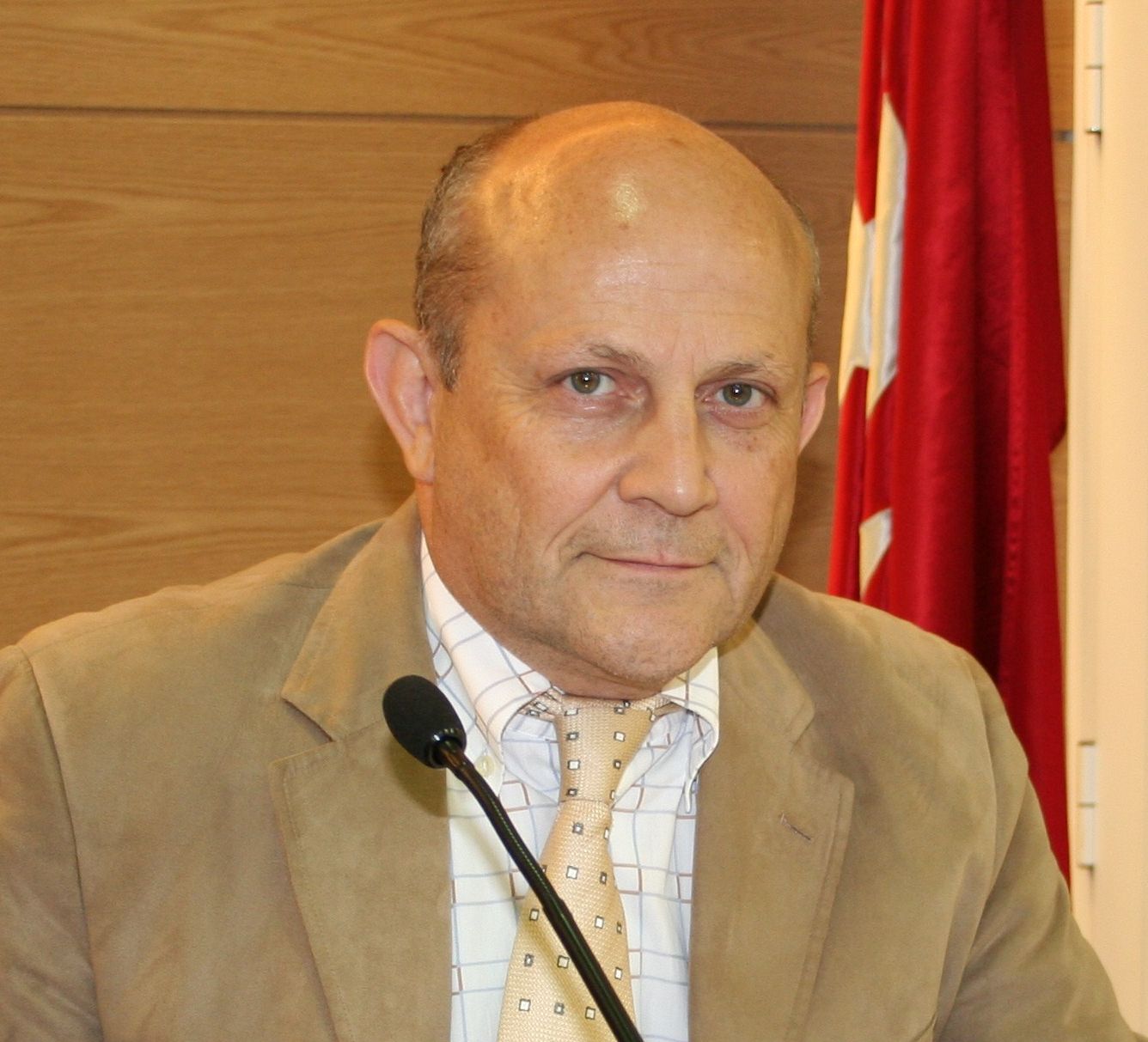
This course presents the project of a new philosophical method, the integral experience, developed by prof. Juan Manuel Burgos based on the contributions of Karol Wojtyla in The Acting Person.
The method has the following features:
- It aims to unify the philosophy of being and philosophy of consciousness, ie overcome the subject-object division
- It is based on the concept of experience developed by Karol Wojtyla
- It is a method specifically personalist distinct from the phenomenological method and the Thomist epistemology.
- It allows to develop a philosophical anthropology and ethics in which the subjective and objective dimension of the person are assumed simultaneously.
First, we will set forth the method as it has been developed by Karol Wojytla in The Acting Person. Afterwards it will be compared with the phenomenological method of Edmund Husserl and the realist phenomenology of Josef Seifert to identify similarities and differences. Later it will be also compared with Thomist, empiricist and Kantian epistemology. This will allow us to conclude that this is a new and original method. Finally, we will show how to understand the philosophy according to this method and its important consequences for the conception of metaphysics and ontology, the structuring of the web of knowledge, the need to think from the person and develop personalistic categories and the new paths open to the knowledge of God.
Questions should be directed to
- Prof. dr hab. Alfred Wierzbicki (a.wierzbicki@diecezja.lublin.pl)
- or dr Paweł Pijas (pawelpijas@gmail.com)